
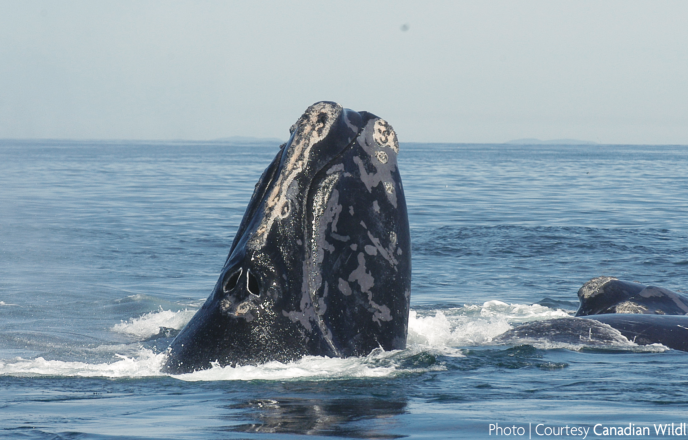
Traveling north? Watch out for migrating right whales
Atlantic Ocean boaters from central Florida northward, get ready for alerts to steer clear of right whales migrating southward to give birth to their young. In mid-December, the first alert zones were posted 12 miles southeast of Atlantic City, NJ., where four whales were seen swimming southbound.
If any whales give birth, as they are meant to do but might not, the best guess by experts is that it will happen somewhere around Cape Canaveral.
As those and many other right whales swim and are sighted, alert zones known as DMA, for Dynamic Management Areas, will be posted along the coast to some place not far south of Canaveral.
Inside those zones, you should throttle down to speeds of 10 knots or slower.
It’s better to detour around the DMA altogether. The slow speed applies to those who can’t resist eagle-eyeing from the flybridge.
It’s all should, not must, because DMA compliance is voluntary. You also should keep your distance from right whales you sight because, according to NOAA, boat/ship collisions are one of their three most dangerous hazards. The others are fishing net entanglement and engine noise.
Right whales are listed as an endangered species. The last confident count, in 2012, scored 440 specimens. The qualifier “at least” was added because, presumably, the scorekeepers could have missed some. More recent estimates are in the vague range of 400 to 600, tops.
They are not hard to see when swimming near the surface. A fully grown right whale can be as long as 55 feet and weigh up to 70 tons.
Better data — or, more viscerally, worse data — track the deaths of right whales. NOAA statistics say 20 of them died this year and last combined. Scientists believe the population of breeding females is down to 100, and no new right whales were known to be born in the south last winter. If any were, they escaped the notice of pods of volunteer observers who watch and record as the whales pass by between Jacksonville and somewhere below the Cape.
That is about as far south as they come for birthing their calves. They stick around until March before returning to their home territory off the New England states and Canada’s maritime provinces.
For more info on right whales, go to: www. floridarambler.com/northeast-florida-getaways/right-whales-in-florida-flagler-county and www.visitflorida.com/en-us/things-to-do/outdoors-nature/ northern-right-whales-florida.html.